
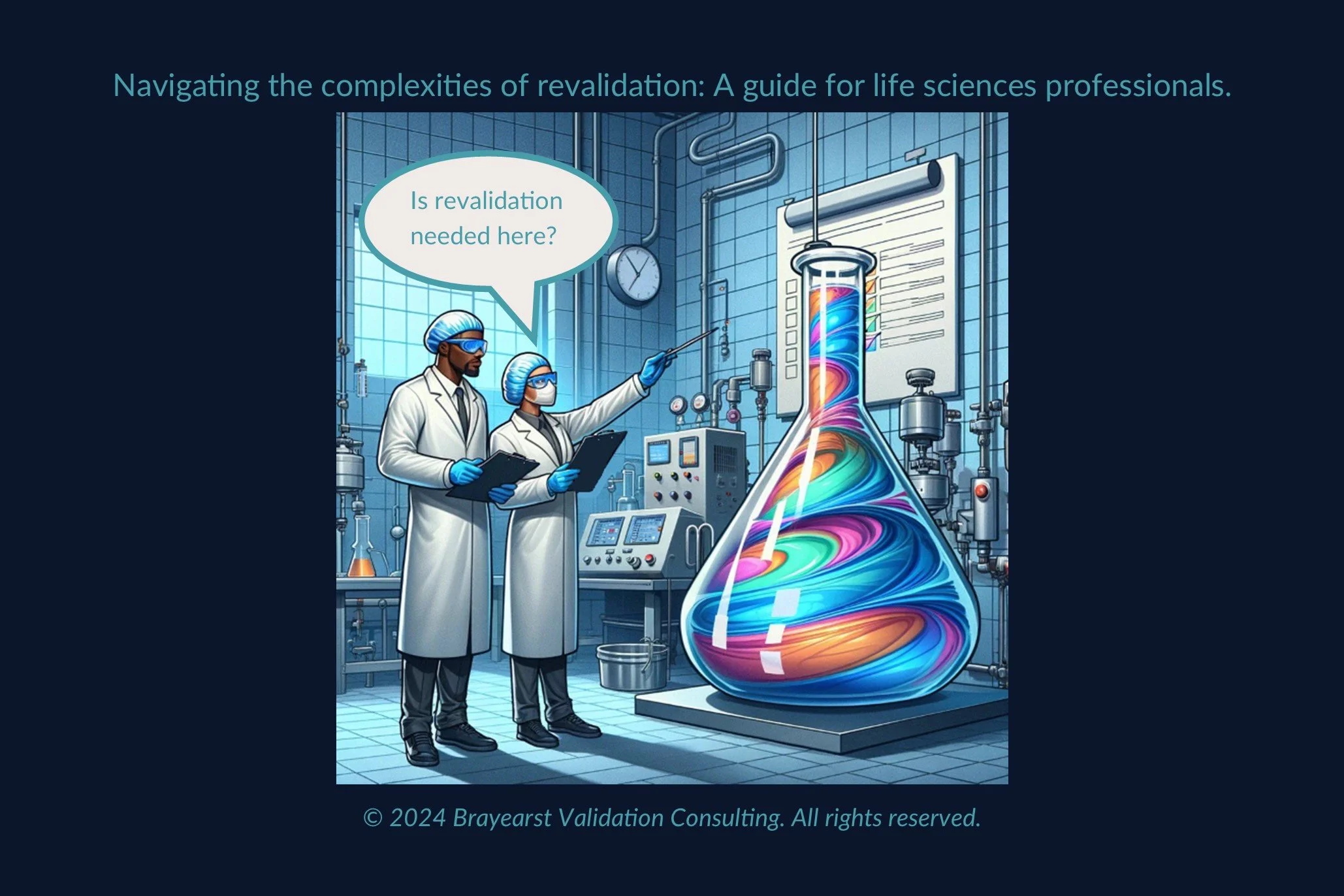
When I conducted a recent webinar on process validation [still available if you missed it], one of the topics that came up was revalidation. This is often one of the more complex aspects of maintaining a validated state, as the subtle details can significantly influence the decision between revalidating and opting not to. Let me share an example from my experience related to mixing dye powder components into solvents. Occasionally, we would get a notification from a dye supplier about a change in their manufacturing process. This would prompt us to assess the situation using our internal change control process.
The necessity for uniformity revalidation can depend on the specific dye powder involved. For instance, if the powder has a 99% or higher purity, there are fewer concerns about solubility challenges from other components. In such cases, if the supplier is providing the same compound, we might justify not revalidating. However, if we're dealing with a powder that has a 70 to 80% purity, the presence of 20 to 30% impurities becomes a crucial factor. These impurities could present a solubility challenge when mixing the powder into solvents. In such scenarios, conducting a uniformity revalidation is essential to ensure that the impurities are effectively dissolved or removed, thereby maintaining the quality of the final product.
Don't miss out on crucial validation insights. Share your thoughts and experiences on LinkedIn or Facebook to enrich our discussion.
About Brayearst Validation Consulting
Brayearst Validation Consulting leverages Six Sigma methodologies to provide targeted validation services for the life sciences industry. We specialize in process, cleaning, software, and analytical test method validation, ensuring compliance with FDA requirements while optimizing operations for efficiency and quality. Our team combines technical expertise with a deep understanding of regulatory standards to deliver process-driven validation documents that withstand rigorous auditor scrutiny. From strategy development to study execution, we empower our clients to achieve operational excellence and bring high-quality products to the market with confidence.
